
The night belonged to a man who has spent thirty-plus years making some of the best American films anyone has made, nominated for the Academy Award more times than is decent, and somehow never won one until now. When Paul Thomas Anderson stepped up to accept Best Director at the 98th Academy Awards on March 15, he looked like a man who had made peace with not winning and then been blindsided by finally getting there. His speech was short, warm, and the kind of genuine that cannot be faked by someone who has been in a room with the industry long enough to know what performed gratitude looks like.
One Battle After Another — PTA’s adaptation of Thomas Pynchon’s sprawling, paranoid novel, starring Leonardo DiCaprio as a washed-up revolutionary named Bob who survives off-grid with his fierce daughter — won six Oscars in total, including Best Picture, Best Director, Best Adapted Screenplay, Best Supporting Actor, Best Editing, and the first-ever Oscar for Best Casting. That last one matters more than it might seem. The Academy introduced casting as a category this year, acknowledging for the first time in ninety-eight editions of this ceremony that assembling the right people in the right roles is an art form, not an administrative function. That the inaugural award went to Cassandra Kulukundis — who assembled DiCaprio, Sean Penn, Benicio del Toro, Teyana Taylor, and newcomer Chase Infiniti into a single ensemble — felt right.
Sean Penn, who won Best Supporting Actor for his role as the menacing Steven J. Lockjaw, was not in attendance. Kieran Culkin presented the award, then quipped: “Sean Penn couldn’t be here this evening, or didn’t want to, so I’ll be accepting the award on his behalf.” The morning after the ceremony, Penn was photographed in Kyiv, cigarette in mouth, stepping off a train. Some people use their Oscar Sunday differently.
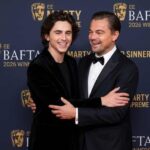
Sinners entered the night as the most-nominated film in Oscar history at 16 nominations and left with four wins, each of them earned in full view. Michael B. Jordan won Best Actor for his dual performance as twins Smoke and Stack. In his speech, he paused before thanking the Black actors who came before him — listed them by name, slowly, the way you list the names of people you genuinely owe something. Timothée Chalamet, who many had expected to win for Marty Supreme, sat in the audience and applauded with the kind of grace that suggests he understood he’d seen something better than what he’d offered.
Autumn Durald Arkapaw won Best Cinematography for Sinners, becoming the first woman ever to win in that category. Her speech was composed for about forty-five seconds and then wasn’t anymore. She asked all the women in the room to stand, said she couldn’t have been there without them, and meant it in the way that’s visible on a person’s face at the moment they understand what has just happened to them. Ryan Coogler won Best Original Screenplay — his first Oscar, for the first original film he’s made outside the studio franchise system.
Jessie Buckley became the first Irish woman to win Best Actress at the Academy Awards, for her devastating performance in Hamnet as Agnes, the mother of Shakespeare’s dead son. She thanked her husband, said she wanted to have “20,000 more babies with him,” then mentioned her eight-month-old daughter, and dedicated the award to the “beautiful chaos of a mother’s heart.” She noted, almost as an aside, that it was Mother’s Day in the UK. The timing was either perfect or the kind of thing that happens when someone is too overwhelmed to be calculating.
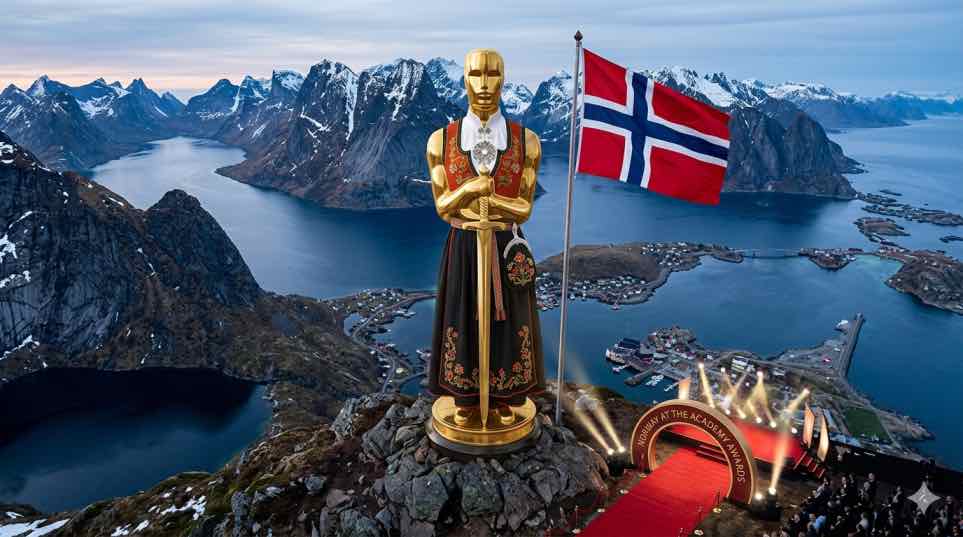
Frankenstein took three awards. KPop Demon Hunters won Best Animated Feature, with director Chris Appelhans telling viewers to “tell your story, sing in your voice — the world is waiting,” a line that landed differently for a film about Korean pop music winning on the biggest stage in world cinema. Norway won its first Academy Award ever with Sentimental Value taking Best International Feature Film — presented by Javier Bardem, who used the moment to say “No to war, and free Palestine” before handing over the statuette. The room received it in the way that such statements at the Oscars are always received — half standing, half seated, the applause uneven but present.
Host Conan O’Brien, returning for his second year, opened by dashing through scenes from nominated films dressed as Aunt Gladys from Weapons and closed by being shoved into an incinerator in a spoof of the winning film’s ending. He signed off with a tribute to Martin Short, whose daughter Katherine died earlier this year, calling him “Marty Short” with the affection of someone who has known a person long enough to earn the abbreviation. The in memoriam segment included Rob Reiner, remembered by Billy Crystal, and a separate tribute to Catherine O’Hara, Diane Keaton, Claudia Cardinale, and Diane Ladd — four women who shaped what screen performance meant and who, in different ways, are still doing it.
The best acceptance speech of the night was the shortest one: Ludwig Göransson, winning Best Original Score for Sinners, pausing to pay tribute to his father. Three words in and he was gone from the prepared version of what he’d intended to say. The room understood.
The 98th Academy Awards complete major winners: Best Picture — One Battle After Another | Best Director — Paul Thomas Anderson | Best Actor — Michael B. Jordan (Sinners) | Best Actress — Jessie Buckley (Hamnet) | Best Supporting Actor — Sean Penn (One Battle After Another) | Best Supporting Actress — Amy Madigan (Weapons) | Best Original Screenplay — Ryan Coogler (Sinners) | Best Adapted Screenplay — Paul Thomas Anderson | Best Cinematography — Autumn Durald Arkapaw (Sinners) | Best International Feature — Sentimental Value (Norway)