


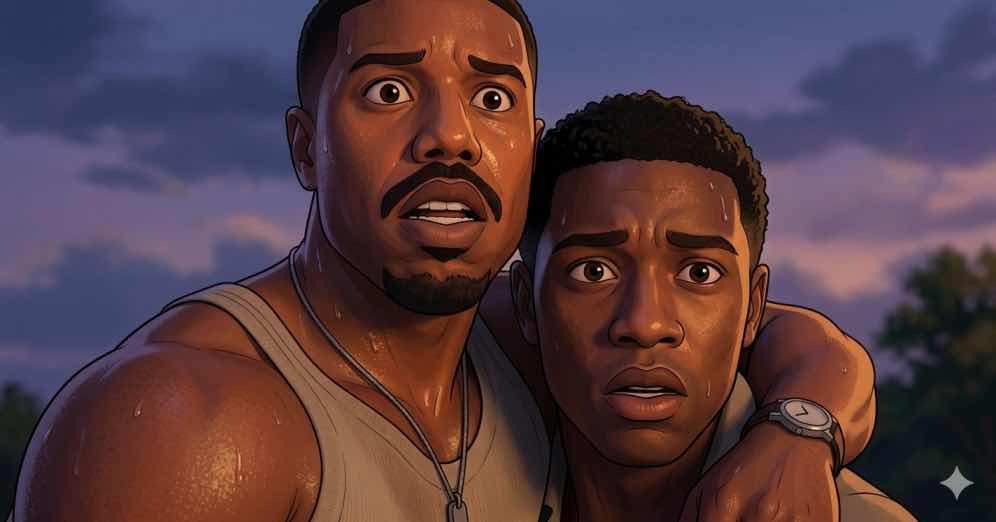
The final scene of Sinners takes place decades after the events of the main film. An elderly Sammie Moore sits in a recording studio, successful, celebrated, and completely alone. It’s a deliberately quiet ending for a film that spent most of its runtime being loud and bloody, and a lot of audiences walked out unsure what to make of it.
Here’s what Coogler is saying.
The vampires in Sinners aren’t just monsters. They represent every force in American history that has tried to extract Black creativity while destroying the people who created it — record labels that owned masters, promoters who took percentages, industries that turned blues into rock and roll and sold it back to a white audience. Remmick, the lead vampire, doesn’t just want to kill Sammie. He wants to possess him — to own his gift permanently, forever, without the inconvenience of the person it lives in.
Sammie survives. But survival has a cost.
Smoke and Stack are dead. The juke joint is ash. The community that gathered that night — the aunts, the cousins, the neighbours, the whole network of people who held each other up — is gone. What Sammie has left is the music, the career, the success, and none of the people he made it for. The ending is Coogler saying that winning on the industry’s terms is still a kind of loss. Sammie got out. What he got out into is a world that wanted his voice but not his people.
The post-credits scene deepens this. A young musician — the implication is clear — sits with a guitar and begins playing the same progression Sammie played that night. The gift passes on. The cycle continues. New talent, new exploitation, new Remmicks waiting. But also new Sammies. The film ends not on despair but on something more complicated: the persistence of the music despite everything that tries to consume it.
There’s a detail most people miss. Throughout the film, Sammie’s father Jedidiah — the preacher — warns him that his gift comes from the devil. It’s framed as religious repression, and on first watch that’s how it reads. But Jedidiah isn’t entirely wrong, just wrong about the source. The danger isn’t supernatural origin. The danger is that gifts that extraordinary attract predators. Jedidiah knew his son was going to be hunted. He just misidentified the hunter.
The crossroads myth — the Robert Johnson legend that you sell your soul at a crossroads in exchange for musical genius — runs through the film’s entire architecture. Coogler’s reframe is this: the deal was never with the devil. It was with the industry. And the industry always collects.
Sammie’s gift survives. Sammie’s world does not. That’s the ending. That’s the sin the title is really referring to — not what any individual character did, but what the world does to people who create things worth taking.